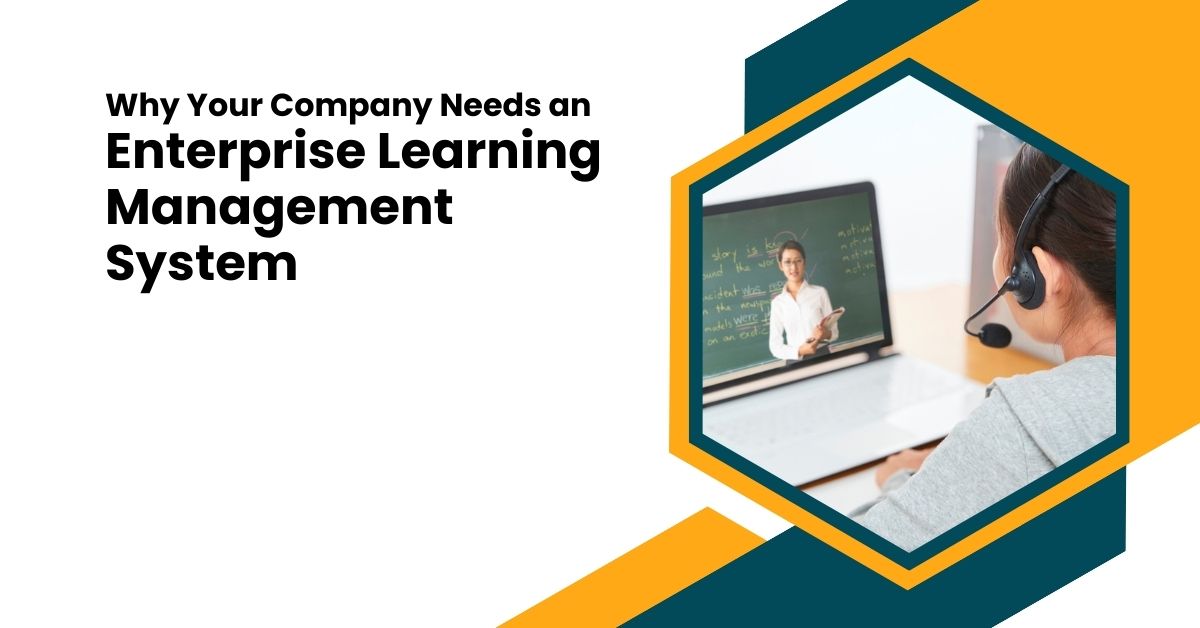
In a competitive environment, businesses are always seeking ways to manage their highly skilled and competent workforce. Never stop learning and improving if you want to stay on top. An enterprise LMS provides a systematic way to train and develop the workforce. This post provides an overview of the growing benefits of an enterprise LMS.
A Learning Management System (LMS) organizes training materials that are available for all employees. The system is easy to learn and saves time, costing less. The organization does not need to schedule multiple sessions and can provide the same training materials online. An Enterprise Learning Management System enables employees to access courses at any time, thereby improving flexibility and productivity.
Learning preferences are different for each employee. Enterprise LMS helps customize the training programs as per personal preferences or skill sets. Because you provide tailored content, the employees connect more with the material. This method encourages motivation while helping retain the information.
Training materials must be consistent. An LMS allows all employees to get uniform information and minimizes discrepancies. Having a standardized solution helps in a common understanding across the organization. An LMS helps companies frequently update their content so that employees always have the latest information.
It is crucial to monitor the progress of training initiatives. An LMS offers analytical and reporting capabilities in detail. Managers will be able to monitor employee participation, track course completion, and assess results. This data-driven approach provides an informed decision-supporting tool to plan future training needs and resource allocation.
Conventional training incurs significant costs, including travel, materials, and other expenses. A Learning Management System eliminates these costs by offering content in a digital format. Organizations are able to scale the size of their audience without incurring more costs. This cost efficiency makes an LMS an appealing investment for organizations of any size.
Over the years, as the enterprises grow, the type of training will also change. This type of growth requires an enterprise LMS that can scale with it. It is built to scale, supporting multiple courses and thousands of users. Furthermore, the LMS enables companies to adjust their training programs as needed, ensuring they remain up-to-date and relevant.
Employees who are engaged tend to be more committed and productive. An LMS can include a variety of interactive elements such as quizzes, videos, and forums. Such functions enable a more dynamic and enjoyable learning experience, resulting in increased employee engagement. This means that employees will be more inclined to complete courses and apply the content to their roles.
Compliance is not just a requirement. Many industries have to follow a regulatory body and go through compliance training. Having an LMS makes it easier to manage these requirements. It allows tracking of certification statuses and sends renewal reminders. This ensures employees continue to comply with the law, thus eliminating the risk of legal trouble and fines.
They say that to retain knowledge, you need repetition and reinforcement. With an enterprise LMS, employees can revisit the training material as and when needed. Such an approach to training ensures continuous reinforcement of learning and enables employees to use these skills effectively in their job roles. Access to information through the course provides you with the opportunity to retain and develop your skills over a long period of time.
As remote work becomes the norm, flexible training has never been more essential. This is where an LMS comes to your aid, as it enables remote learning. It further means that training materials can be accessed anytime and anywhere, ensuring that location is not a hindrance to professional development. This accessibility serves a varied and far-flung workforce.
Collaboration enhances learning experiences. A Learning Management System can also integrate social learning features, enabling employees to interact with their peers. Discussion boards and group projects enable a sense of community and knowledge sharing. As a result, it fosters teamwork and adds to the richness of learning.
There are many advantages of having an Enterprise Learning Management System for organizations. An LMS can be massively beneficial when it comes to supporting continuous development, as it comes with multiple advantages, such as improved efficiency and increased engagement. It is through attention to learning that organizations will be able to develop a better-equipped workforce to face the challenges that the future holds. Adopting an LMS is not a random decision; it pays dividends in the long term.