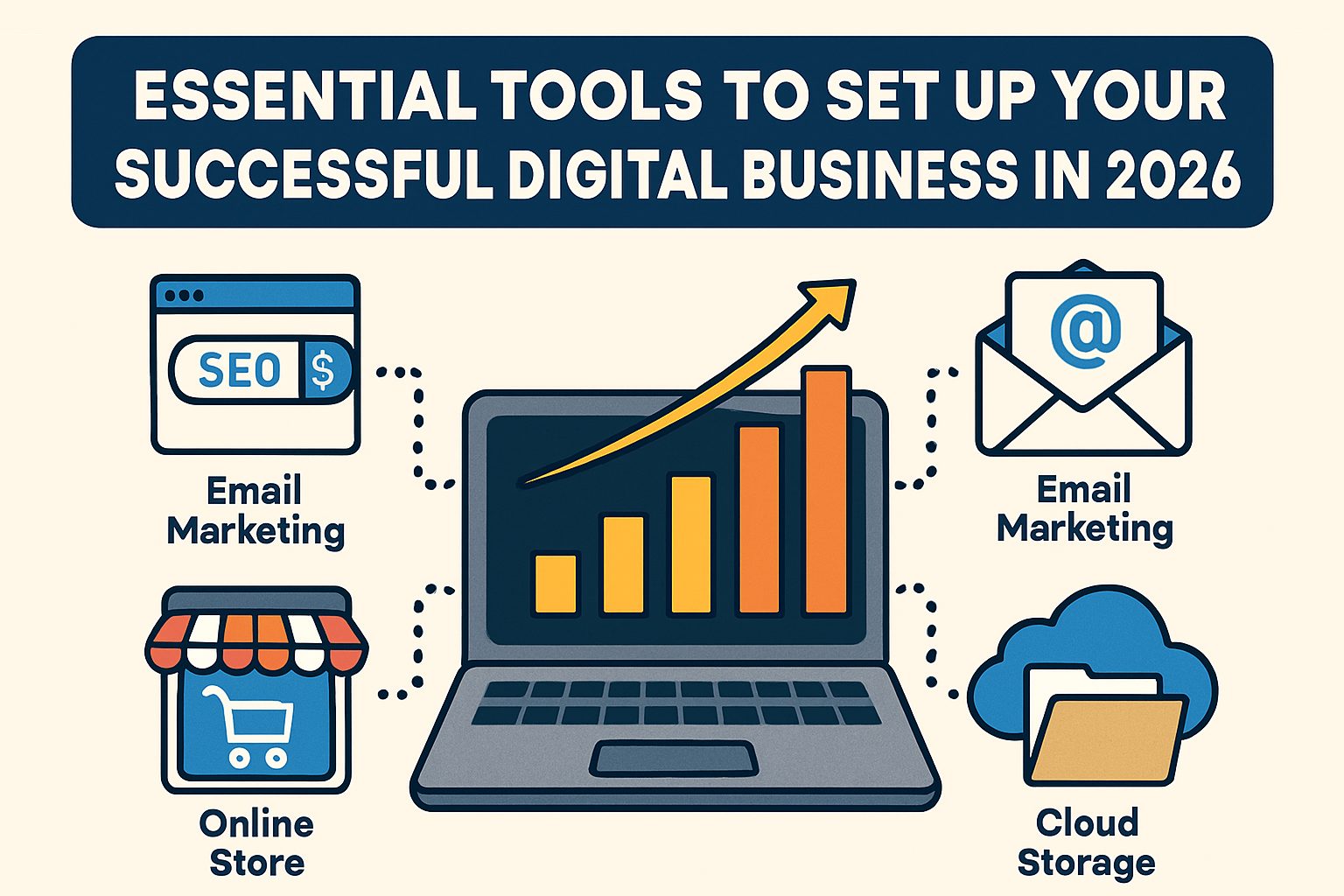
Behind every successful online brand sits a stack of tools that support visibility, marketing performance, customer experience, and sales operations. The tools you choose will shape how effectively your solo business can grow. As competition online intensifies, building a digital business means thinking strategically about the platforms and systems that will support your commercial success from day one.
Your website is the foundation of your digital business, which is why you want a website builder that can translate your ideas into a powerful design.
A strong platform needs to tick a few boxes: fast load times, mobile responsiveness, SEO-friendly structures, and the flexibility to update content easily.
There are many popular options. For instance, WordPress offers extensive customisation and scalability, making it suitable for content-driven and service-based businesses. Platforms like Wix and Squarespace are great for visually polished sites with minimal setup time. Shopify is often the go-to choice for e-commerce businesses that need built-in product and checkout functionality.
The best platform is ultimately one that supports your long-term marketing and growth goals.
Once your website goes live, you’re going to want to pay attention to your marketing tools!
Things like Google Analytics and Google Search Console are handy for understanding your traffic sources, user behaviour, and search visibility. That way, you can make marketing decisions that actually make sense.
Having dedicated pages that are just landing pages is a big deal in digital marketing, especially for product launch and lead generation. That’s why you need creative tools that help you build a landing page instead of a standard web page. Tools like Canva and Renderforest, for example, make it easy to knock up some visuals and videos that match your brand.
Getting traffic to turn into cash requires a sales setup that’s secure and trustworthy for customers. Choosing the right payment gateway is key, as it affects how long the checkout operates.
But beyond payment, you also need an effective tax calculation solution that keeps your business compliant, whether you need to file sales tax in Texas, for example, or the HMRC VAT tax. If you get your tax setup right from the start, you can actually scale your online business without any unnecessary problems.
A good product image builds trust and shows the value of your product. In a crowded digital space, this is particularly helpful to help your products stand out. Tools like Adobe Express let you create engaging product images, banners, and even promotional graphics without needing design skills.
The product descriptions matter too. You need to make sure they’re accurate and consistent across all platforms. This is where AI-driven copy tools like Jasper and Copy.ai come in handy to write product descriptions at scale.
Blog writing tools help you out in the whole process. Google Docs and Notion make collaboration and planning a breeze. Tools like Grammarly help you make sure your writing is grammatically sound.
If you’re really focused on search rankings, you need to be using SEO tools like Surfer SEO or Clearscope to make sure your content is hitting all the key ranking factors.
Hopefully, these few tools can help you get started with your solo business. They don’t replace a strong business plan and a good idea, but they make running your business more manageable.