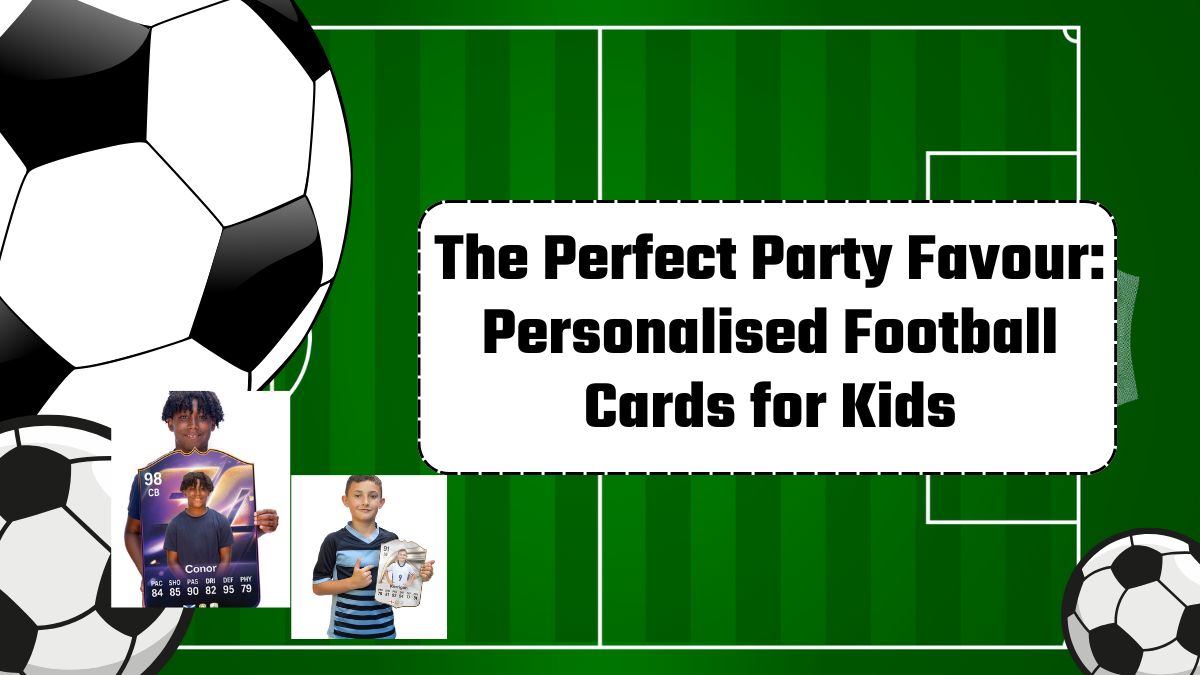
Kids’ party favours have quietly become a high-stakes decision. You want something that feels special, doesn’t end up in the bin on the car ride home, and won’t blow the budget once you multiply it by 20 classmates. For football-mad kids (which is to say: a lot of them), personalised football cards hit a rare sweet spot. They’re small, affordable, inherently “collectible,” and—most importantly—about the child, not just the party theme.
There’s also a cultural tailwind here. Trading cards have surged back into mainstream kids’ culture through schoolyard swaps, sticker books, and the wider collectibles boom. That means you’re not introducing a new idea; you’re tapping into something they already understand. And when a favour fits an existing habit—collecting, comparing, trading—it gets kept.
Most favours fall into one of two buckets: disposable entertainment or sentimental keepsake. Personalised football cards manage to be both. They have the instant appeal of something “playable” (kids love anything with stats, rankings, and names), but they also function like a mini memento—especially when you include the party date or a short message from the birthday child.
The underrated value of a good party favour is what it does during the party, not after. Football cards naturally encourage conversation: “What’s your position?” “How fast are you?” “Who’s got the highest shooting?” You can even build a simple party moment around them—hand them out early, let kids compare, and you’ve got a built-in icebreaker without awkward structured games.
Custom items can get pricey fast, but cards are light on materials and easy to distribute. You can make each guest’s card slightly different (their name, photo, favourite team colours) without needing entirely separate products. That’s a practical win when you’re dealing with mixed ages, siblings, or last-minute RSVP changes.
A football card works because it looks like something they’ve seen before. That familiarity makes it instantly legible: portrait, name, club, position, stats, maybe a “special move.” If you’re starting from scratch, it helps to use a structured layout rather than free-styling a poster in miniature.
If you want a head start on the design side, it’s worth browsing our range of custom football card templates to see common layouts, stat ideas, and ways to make the cards look “official” without overcomplicating the process.
Here’s the trap: adults tend to assign “realistic” numbers, while kids want numbers that feel like a game. You can split the difference by choosing stats that don’t invite hurt feelings. For example, giving one child “99 pace” and another “42 pace” might be accurate in your eyes, but it can land badly in a party context.
Instead, keep ratings clustered (say 70–95) and lean into playful categories: “Teamwork,” “Energy,” “Celebration,” “Creativity.” The point isn’t scouting; it’s making every guest feel like a star.
A photo makes the card personal in a way names alone can’t. But you don’t need professional headshots. A clear smartphone photo works if you follow a few rules: face visible, plain-ish background, good light, and no busy patterns that turn into visual noise when cropped small.
If you’re printing at trading-card size, test one sample first. Details that look fine on a screen can get muddy in print—especially dark shirts on dark backgrounds.
A strong card is simple, readable, and “collectible.” If you’re wondering what information to put on it, here’s a reliable structure:
That’s plenty. The goal is instant recognition, not a biography.
If the cards are too flimsy, they’ll bend and feel disposable. If you can, print on thicker card stock and consider a gloss finish for that classic trading-card feel. Laminating is optional; it can look great, but it’s also extra time and cost. Another compromise is to print slightly thicker and include simple sleeves—kids who collect anything will immediately “get” why sleeves matter.
A small detail goes a long way. You don’t need elaborate gift boxes; a simple envelope with a football sticker seal or a mini “pack” design creates that moment of anticipation. If you want to add a party-game twist, hand them out like packets and let kids “open” them together.
Not every child at a football-themed party plays football. Some might love it casually; others might be there because they’re friends with the birthday child. You can make the cards welcoming by keeping the tone light and avoiding anything that implies skill level is the point. “Super sub,” “Captain of Fun,” or “Playmaker” can be just as exciting as “Striker.”
Set up a small table where kids can add one finishing touch: choose a sticker “badge,” pick a nickname to write on the back, or select a “signature move.” This reduces the pressure on you to make everything perfect in advance, and it gives kids ownership.
You don’t need a full tournament bracket. A quick, low-stakes game like “Top Trumps-style” comparisons works well: highest “energy” wins, then swap cards. It’s fast, funny, and keeps everyone involved—even kids who don’t want to run around.
The best favours don’t just fill a bag; they extend the memory. Personalised football cards do that because they’re small enough to carry, interesting enough to show off, and personal enough to matter. They sit in pencil cases, get traded at lunch, and resurface months later when kids are sorting their “important stuff.”
And that’s really the point, isn’t it? A kid’s birthday party is one afternoon. A good favour turns it into a story they keep telling.