A memorable game character goes beyond a merely aesthetically pleasing artwork. The process of character design encompasses personality, story telling, stylistic elements, gameplay considerations and technical factors in order to produce characters that fit seamlessly into their gaming environment.
For studios that are creating a new game title, a professional character design paintpool can be of assistance in converting initial ideas into clear visual concepts which can be employed by the artists and developers during the production process.
Characters tend to be among the first aspects noticed by gamers. Silhouette, color, costume, and style of movement can make a character recognizable even without knowing his name or his role.
Characters also help create consistency within the visuals. For instance, characters from a fantasy RPG will need costumes, weaponry, accessories, and proportionate body structure for a certain period of history. Meanwhile, sci-fi games require future materials and technology in terms of armor and other visual elements.
Concept art helps game designers make choices prior to investing much effort into production. Studies of concept art in games show concept development as one of the important stages in idea generation and communication of the visual direction.
The character never gets developed straight away from description to final asset. There will always be many iterations of the idea before its ultimate execution.
Good character design conveys certain information about the character without the need for extensive explanations. It can be done through clothes, posture, facial expression, gear, hairstyle, and color among others.
For instance, a seasoned warrior may wear practical clothing, used gear, have scars and use muted colors. On the other hand, a young inventor will have tools, strange accessories, layered clothing and brighter colors that define their personality.
The idea here is not to simply add visual cues. Rather, each visual cue should be meaningful to the role and background of the character among others.
Finding silhouettes is also an essential step. The character should be recognizable even at a distance or from the perspective of a silhouette.
The artist can come up with multiple variations of the character with different body proportions, costumes, hairstyles, weapons, or accessories. This way, it is possible to analyze different directions and select the best one.
A good character concept design process may include the following steps:
It helps convert the abstract concept of a character into visual data.
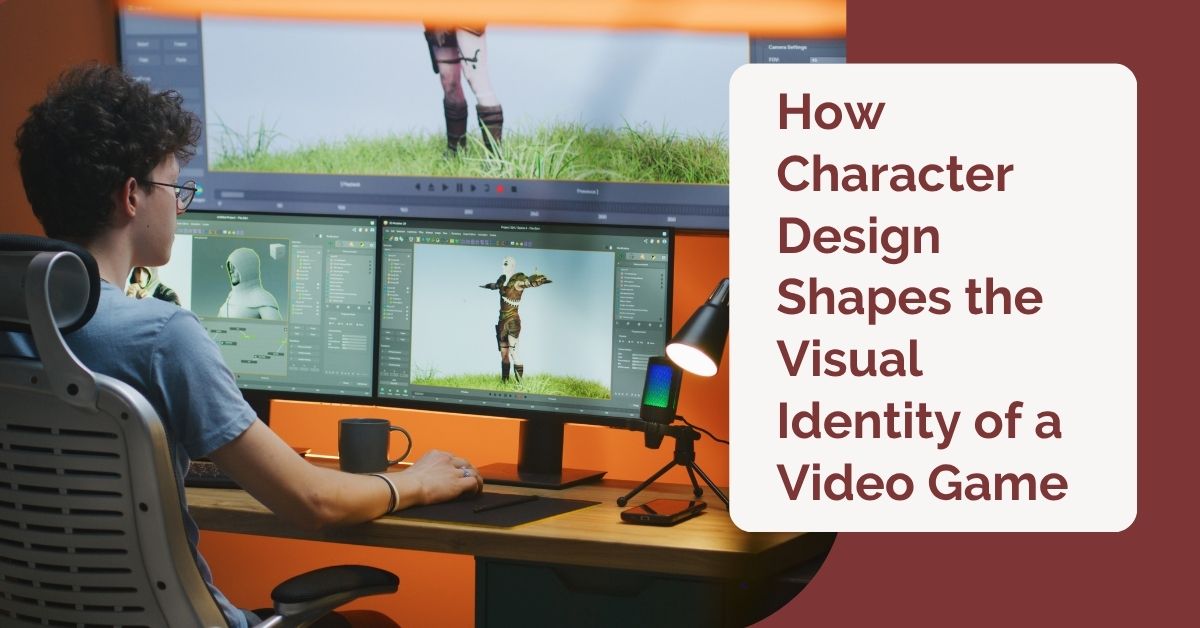
Concept art for characters takes on great importance when the game shifts from being developed in 2D to being produced in 3D. The 3D artist requires references in terms of proportions, clothing, accessories, materials, and construction.
A character sheet in detail provides for front, side, and back perspectives, as well as close-ups of any equipment or costume parts. This limits the number of assumptions that have to be made in the modeling process.
The concept should also be mindful of how the character is going to operate within the actual game. Clothing that looks good in one image might require some adjustments if it inhibits the ability of the character to animate or play the game. Similarly, highly detailed accessories may require simplification due to the platform needs and the distance of the camera.
According to the educational materials provided by Riot Games, the character artist deals with creative and technical aspects of the character development, including modeling and texturing after the concept.
Visual elements and gameplay must not be developed independently. The way a character looks could enhance the comprehension by the player of their skills and purpose. A character dressed in heavy armor could visually indicate their defensive or strong nature, and a lightly armored character in tight clothing could suggest speed. Colors could also be used to distinguish different teams and classes of characters.
The approach to design naturally varies depending on the game.
A mobile game may benefit from simpler forms and more legible colors since characters will generally be shown in smaller scales. A cinematic RPG can afford much more elaborate costumes and facial features. Multiplayer games may favor quick recognition, whereas story-based games may value visual storytelling more.
That is precisely why it is necessary to develop character design alongside the game’s art direction.
Not all video game developers need a big art department within their organization. It is possible to outsource in order to get access to specialized artists without having to increase the size of the team.
Such outsourcing may prove helpful if the developers require more concept artists, 2D artists, 3D artists, animators or UI/UX artists at a certain stage of the game development process.
In any case, communication is key to successful outsourcing. The third party artists must be provided with all the art direction, references, technical requirements and feedback process.
Character creation is just one aspect of the broader visual production process. Characters have to fit in together with the environment, props, user interfaces, effects, animation, and promotion.
Having an established art direction will help ensure that all the pieces seem like they are from the same world. Colour, scale, shading, materials, and forms are just some of the ways this can be achieved.
For production companies, it may then be helpful to set up visual standards at an early stage.
Working on character development prior to beginning production can assist teams in finding issues before it becomes too difficult to change them. If the character does not match with the story or the overall vision of the game, it is better that it gets reworked on during the concepts phase and not after modelling and animating.
The more crucial thing is the fact that character design will give players an image to recognize visually. The best-designed characters are the ones that match aesthetically but also tell you about their identity.
Character design is crucial for creating the identity of the game. From initial silhouette sketches through to production-ready references, each stage contributes to bringing the character to life in order to serve story-telling, gameplay, animations, and art direction purposes.
When a company creates stylized games for mobile devices, realistic games for consoles, or fantastic worlds of various sizes, character design will help to have a better basis for everything else. Proper planning and coordination of the process of concept art, 3D modeling, animations, and gameplay will make the characters useful and memorable at the same time.