Most maintenance teams don’t fail because they lack effort. They fail because the system around them is fragmented, with paper logs in one place, spreadsheets in another, and tribal knowledge living in someone’s head. It works fine until it doesn’t! Then the same problems repeat: surprise breakdowns, rushed work orders, missing parts, and uncomfortable questions about cost and accountability.
That’s why enterprise asset management (EAM) matters. If you have ever searched for the best enterprise asset management software, you might have noticed how common the term has become. It’s often used as a shorthand for the tools and processes that help organizations manage physical assets with greater consistency, stronger data visibility, and clearer lifecycle discipline, rather than simply fixing things after they fail.
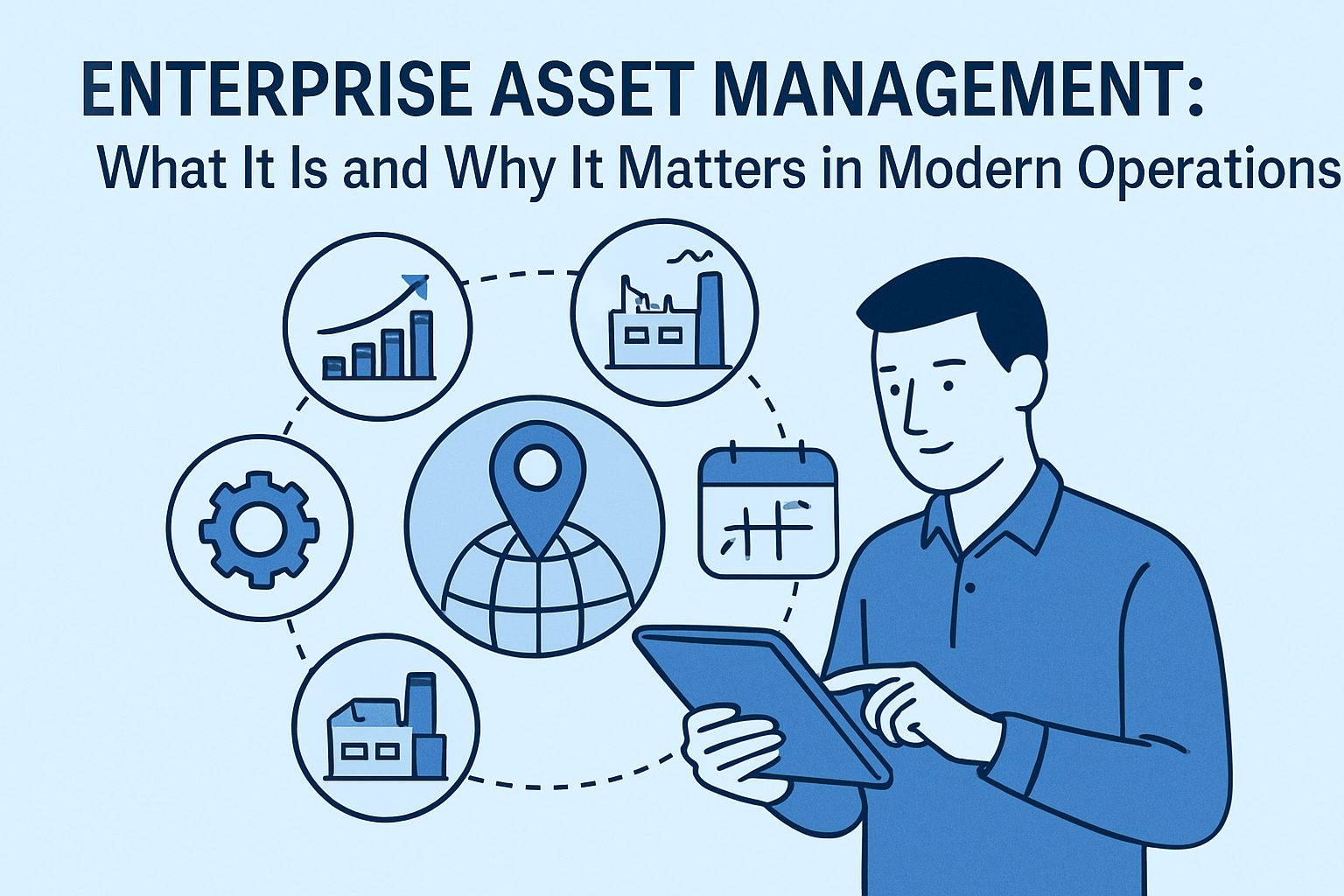
Enterprise asset management is the combination of practices, governance, and systems used to manage physical assets across their full lifecycle, which includes planning, acquisition, commissioning, operation, maintenance, compliance, and retirement. In other words, it’s not only about maintenance. It’s about how assets create value or risk over time.
This is why EAM shows up in standards-driven environments, too. The ISO 55000 standards define asset management as a planned, end-to-end approach to managing assets for long-term value, rather than reacting to failures as they occur.
A competent supervisor can typically maintain the operation of a small site by personally documenting assets and maintenance, rather than through formal systems. However, as soon as operations span multiple sites, contractors rotate, audits increase, and asset portfolios grow, the old approach stops scaling and starts costing money.
Here are a few common instances where these problems thrive:
EAM is essentially the operating model that prevents this from turning into chaos. It establishes consistent rules for how assets are recorded, how work is documented, and how decisions are reviewed across sites. Without this structure, small gaps can compound over time, making performance harder to compare, costs harder to control, and failures harder to anticipate.
Many competitor explanations define enterprise asset management as lifecycle management. While correct in principle, the operational difference depends on what assets are governed, measured, and improved over time.
A robust EAM approach usually includes:
Accurate records show what equipment exists, where it is installed, and how it is performing, preventing confusion caused by outdated or duplicated entries.
Work orders document both the task completed and the reason, helping teams fix recurring issues rather than repeat temporary repairs.
Repair, replacement, or run-to-failure choices are based on maintenance history, downtime impact, and cost trends rather than habit.
Parts usage is linked to maintenance activity, reducing shortages, excess stock, and last-minute delays.
Beyond individual functions, EAM provides a shared operating framework. It ensures that maintenance, inventory, and asset decisions are based on the same data, reviewed consistently, and comparable across teams and sites. This alignment is what allows asset performance to be managed systematically rather than reactively.
EAM is not optional when uptime and safety are at risk. It is crucial for the following reasons:
A single failure can trigger emergency repairs, production rescheduling, rushed sourcing of parts, overtime, and quality issues. That said, the impact often extends beyond the failed asset, disrupting downstream operations and daily production commitments.
As experienced technicians retire, undocumented knowledge leaves with them. EAM helps retain essential information such as procedures, maintenance history, failure patterns, and proven corrective actions, reducing reliance on an individual.
Even outside heavily regulated industries, customers and insurers expect traceability. Clear documentation is no longer administrative overhead; it is a form of operational risk control. Detailed record-keeping makes audits easier, supports accurate incident reviews, and removes ambiguity around who did what and when.
Enterprise asset management delivers the greatest impact in asset-heavy environments such as manufacturing, utilities, energy, transportation, facilities, and healthcare, where a single failure can disrupt an entire day of operations. Beyond reducing breakdowns, its real value lies in ensuring consistency across how assets are tracked, how maintenance is performed, and how decisions are made.
When sites follow the same operating approach, performance can be compared honestly, recurring problem assets become visible, and repeated spending on the same issues can be avoided. Enterprise asset management does not eliminate failures, but it reduces surprises by helping teams detect issues earlier, respond more consistently, and make better lifecycle decisions based on evidence rather than memory.