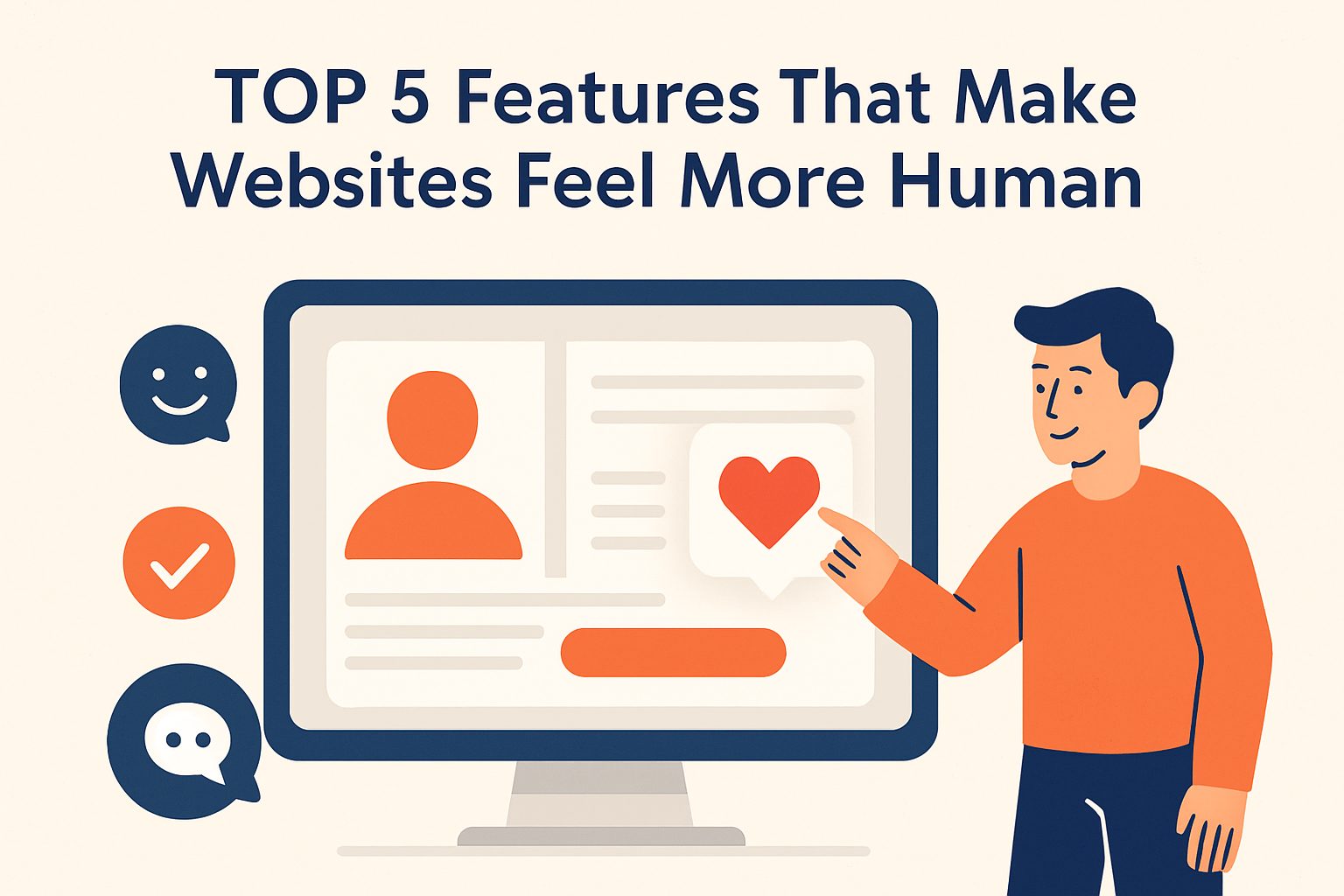
People can tell. Within seconds of landing on a page, they know whether a website was built for humans or just to exist. The difference isn’t always obvious — it’s rarely one big thing. It’s texture, rhythm, response. Here are five features that genuinely close the gap between a screen and a person.
There’s a reason 79% of consumers prefer live chat over other contact methods — it’s instant, it’s human, and it doesn’t make you wait on hold listening to smooth jazz. Live chat widgets, when done right, don’t feel like a chatbot maze. They feel like knocking on a door and having someone actually open it.
1-on-1 video communication on websites creates intimacy that group chat never can. A cooking platform that lets users hop on a quick call with a chef. A language-learning app where you’re randomly matched with a native speaker for five minutes. These aren’t gimmicks—they’re architecture decisions that say we trust people to connect with each other.
Some platforms go further. You may have heard of random video chat, and it’s becoming increasingly popular. People open a website and can meet new people online without unnecessary complications. In this context, 1-on-1 communication also works because users feel free: there are no profiles or subscriber counts.
Graphic design on websites does something underestimated: it communicates mood before a single word is read. A site with rigid grid lines and cold typography signals efficiency. One with loose spacing, hand-drawn elements, and varied type weights says we made this for you. According to research by Adobe, 38% of visitors stop engaging with a website if the layout or content is unattractive.
Micro-animations — a button that softens when clicked, a menu that slides rather than snaps — make a page feel alive. Imperfection, used intentionally, is powerful. A slightly uneven illustration border. A color palette that feels chosen rather than generated. These are the signals that a human touched this thing.
You know the image. A diverse team of attractive professionals laughing around a laptop, no one looking at the screen. Nobody believes it. Websites that rely on generic stock imagery feel like facades. Real photo and video editing — using actual people, actual spaces, actual moments — changes everything.
Proper photo and video editing doesn’t mean raw and unfinished. It means purposeful. A slightly warm color grade on team photos. A short behind-the-scenes video that isn’t over-produced. A founder talking to a camera without a teleprompter. HubSpot research found that 54% of consumers want to see more video content from brands they support — and the videos that land hardest are the ones that feel like they could have been made by a person who cared, not a department that had a budget.
There’s a difference between a website that tracks you and one that recognizes you. Personalization done well feels like a waiter who remembers you take your coffee black. Done poorly, it feels like being followed. The goal is the first one. According to Salesforce, 76% of consumers expect companies to understand their needs and expectations.
Returning visitors greeted by name. Product recommendations based on what someone actually browsed, not purchased. A homepage that shifts depending on whether you’re a first-time visitor or a loyal one. None of this requires invasive data practices. It requires care — and a design system flexible enough to respond to the person in front of it.
AI tools are everywhere now. The websites that use them well never announce it. A search bar that understands natural language instead of demanding exact keywords. A support bot that genuinely resolves the issue rather than looping you through FAQs. A writing assistant that adapts to your tone rather than overriding it. These AI tools, when embedded carefully, remove friction — and that’s what makes a website feel human. Friction is what reminds you you’re dealing with a machine.
Slapping a chatbot on the homepage and calling it AI-powered isn’t a feature — it’s decoration. The AI tools that earn trust are the ones users don’t have to think about. They just notice that something worked. McKinsey found that companies using AI personalization see a 10–15% lift in revenue, but the experiential reason behind that number is simpler: people came back because it felt easy, and easy feels human.
None of these features work in isolation. Live communication needs good visual design to feel trustworthy. Real media needs honest editorial choices behind it. Personalization without warmth is just targeting. AI tools without empathy are just automation with a friendly font.
The websites that feel human aren’t following a checklist. They’re making consistent decisions that say: a real person thought about this. And that — more than any single feature — is what people actually respond to.